Petros CH32H417M Alef Breakout - Dual RISC-V Core & USB3.0 MCU Board
1. Overview
CH32H417 is a 32-bit microcontroller developed by Nanjing Qinheng Microelectronics, designed for embedded product development. It features USB3.0 high-speed interface and dual-core RISC-V architecture. Leveraging these advantages, XPU Labs has launched the Petros CH32H417M Alef development board.
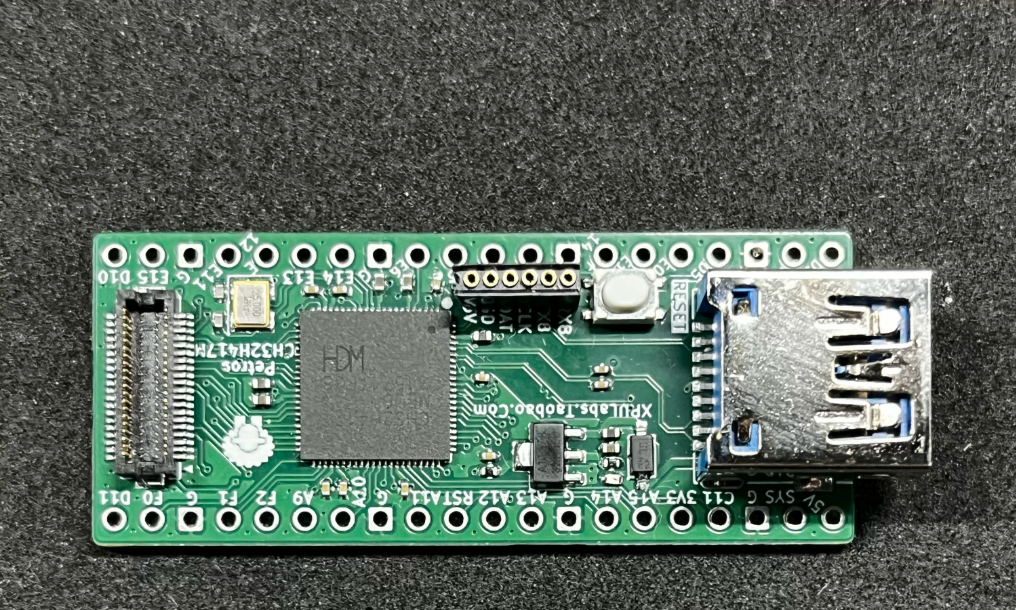
This board adopts the CH32H417MEU6 microcontroller packaged in QFN88 form factor. Measuring 52mm × 21mm, it boasts a compact size and pin-compatible layout with Raspberry Pi RP2040 Pico. Equipped with a USB3.0 Type-A female port, it supports the development of high-speed USB3.0 devices. Actual tests show its downstream transmission speed reaches 430MB/s, making it ideal for high-speed data acquisition. On-board board-to-board connectors bring out DVP, I2C, SPI and ADC interfaces for convenient connection with various sensor modules.
2. Chip Features
- Dual-core architecture: Qingke RISC-V5F and RISC-V3F
- V5F maximum frequency: 400MHz, V3F maximum frequency: 144MHz
- 896KB SRAM, 960KB Flash
- System supply voltage: rated 3.3V
- Conventional GPIO supply voltage: rated 3.3V, supports 1.8V
- High-speed GPIO supply voltage: selectable 1.2/1.8/2.5/3.3V
- 2 groups of 16-channel universal DMA controllers
- 2 groups of 12-bit analog-to-digital converters (ADC), sampling rate up to 5Msps, supporting dual ADC conversion mode
- 1 group of 10-bit high-speed analog-to-digital converter (HSADC), sampling rate up to 20Msps
- 16-channel TouchKey detection
- 2 groups of 12-bit digital-to-analog converters (DAC)
- 32-bit wide 125MHz universal high-speed interface (UHSIF)
- 144MHz digital image interface (DVP)
- 200MHz dual-edge SD/EMMC controller (SDMMC)
- SDIO host/slave interface: supports SD/SDIO/MMC
- Single-wire protocol master interface (SWPMI)
- Programmable protocol I/O controller (PIOC)
- Ethernet controller MAC and 10M/100M PHY
- 5Gbps ultra-high-speed USB 3.0 controller and PHY
- 480Mbps high-speed USB 2.0 controller and PHY
- Full-speed USB 2.0 controller and PHY
- Long-distance SerDes controller and PHY, supporting kilovolt-level high-voltage signal isolation transmission
- USB PD and Type-C controller and PHY
3. Board Specifications
- Main Chip: CH32H417MEU6, QFN88 package, dual-core RISC-V with USB3.0
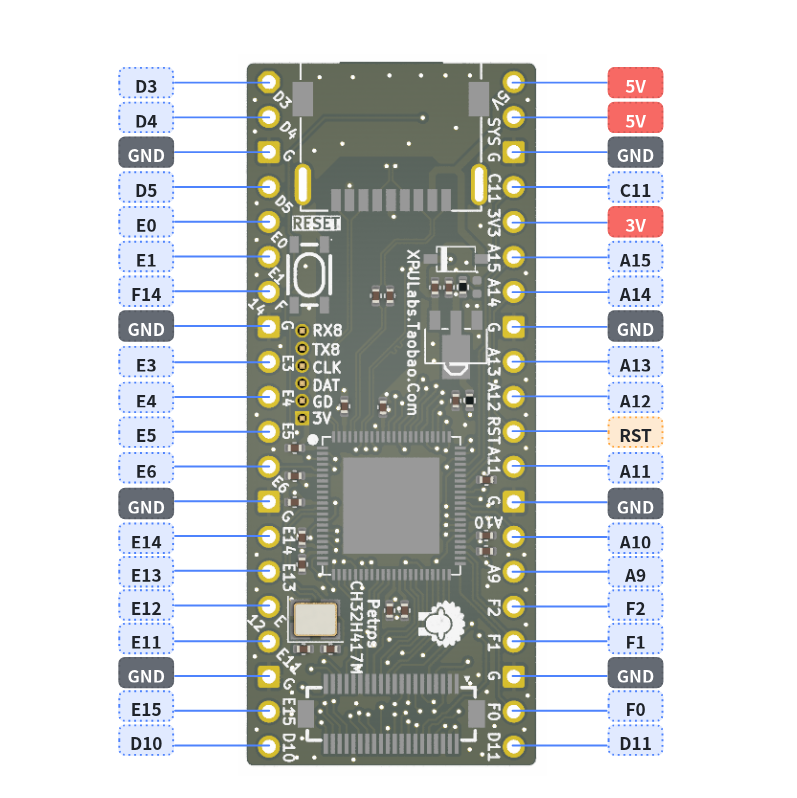
- 100% form-factor compatible with Raspberry Pi Pico
- Board-to-board connector supports expansion of camera modules such as OV2640
- All GPIO pins are accessible for convenient development
- DVP, SPI, I2C and ADC interfaces led out via board-to-board connector
- On-board reset button
- Firmware downloadable via USB3.0 Type-A port
- Built-in SWD and UART6 debugging interfaces
- Comes with multi-interface Link-E debugger, plug-and-play
- Dimensions: 52mm × 21mm
4. Hardware
Interfaces
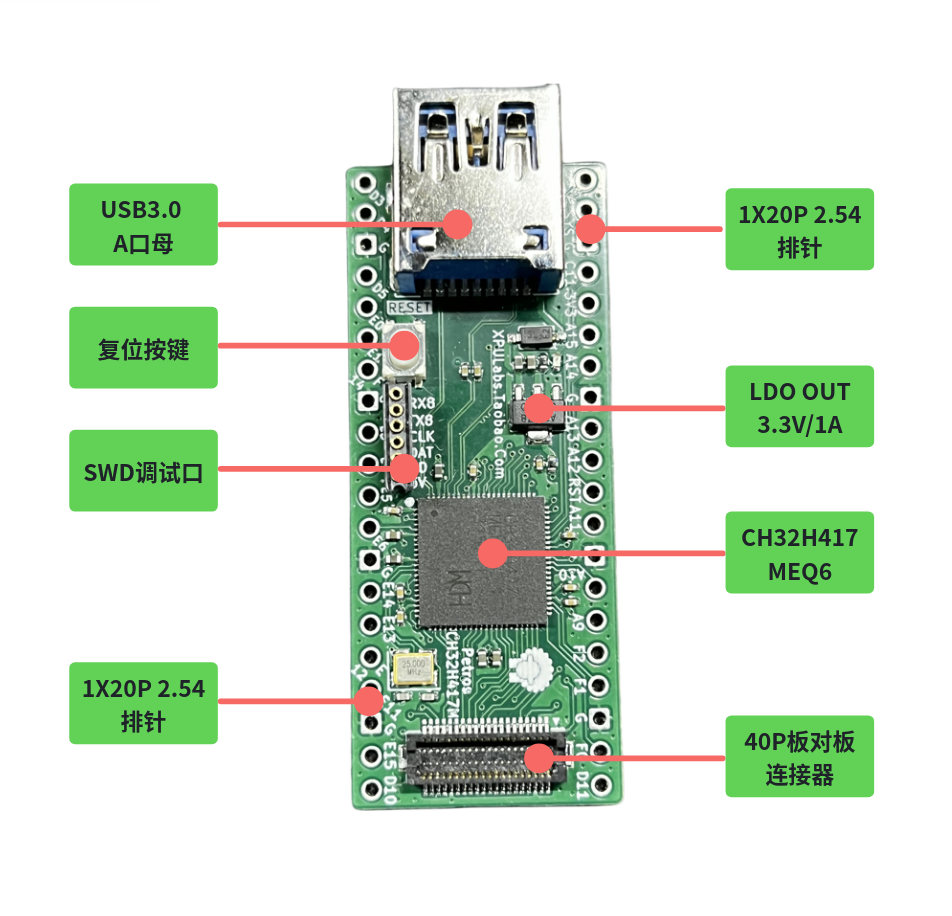
Pins
The pin definition of the 40-pin board-to-board connector is as follows. The adopted connector model is HRS DF12NB(3.0)-40DP-0.5V(51).
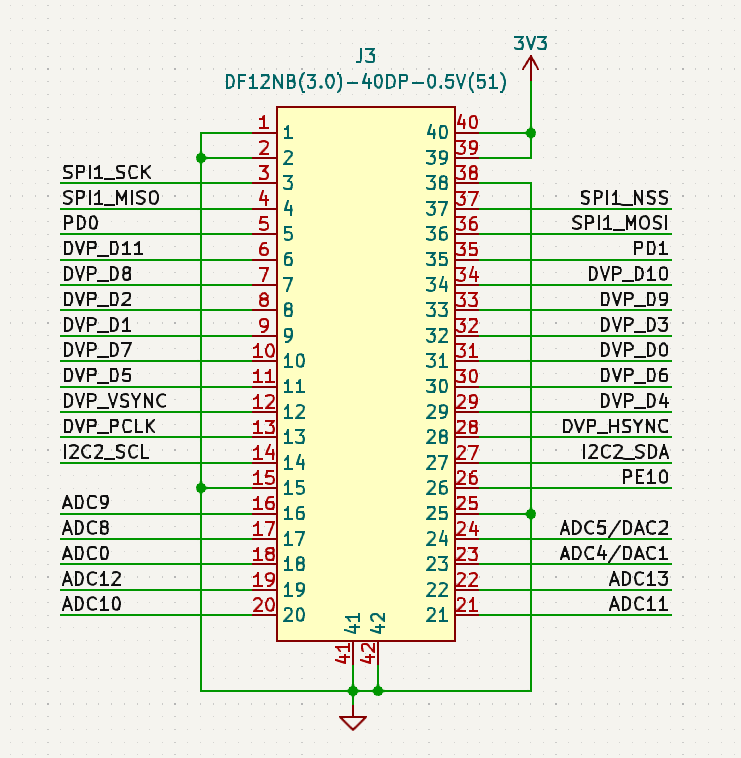
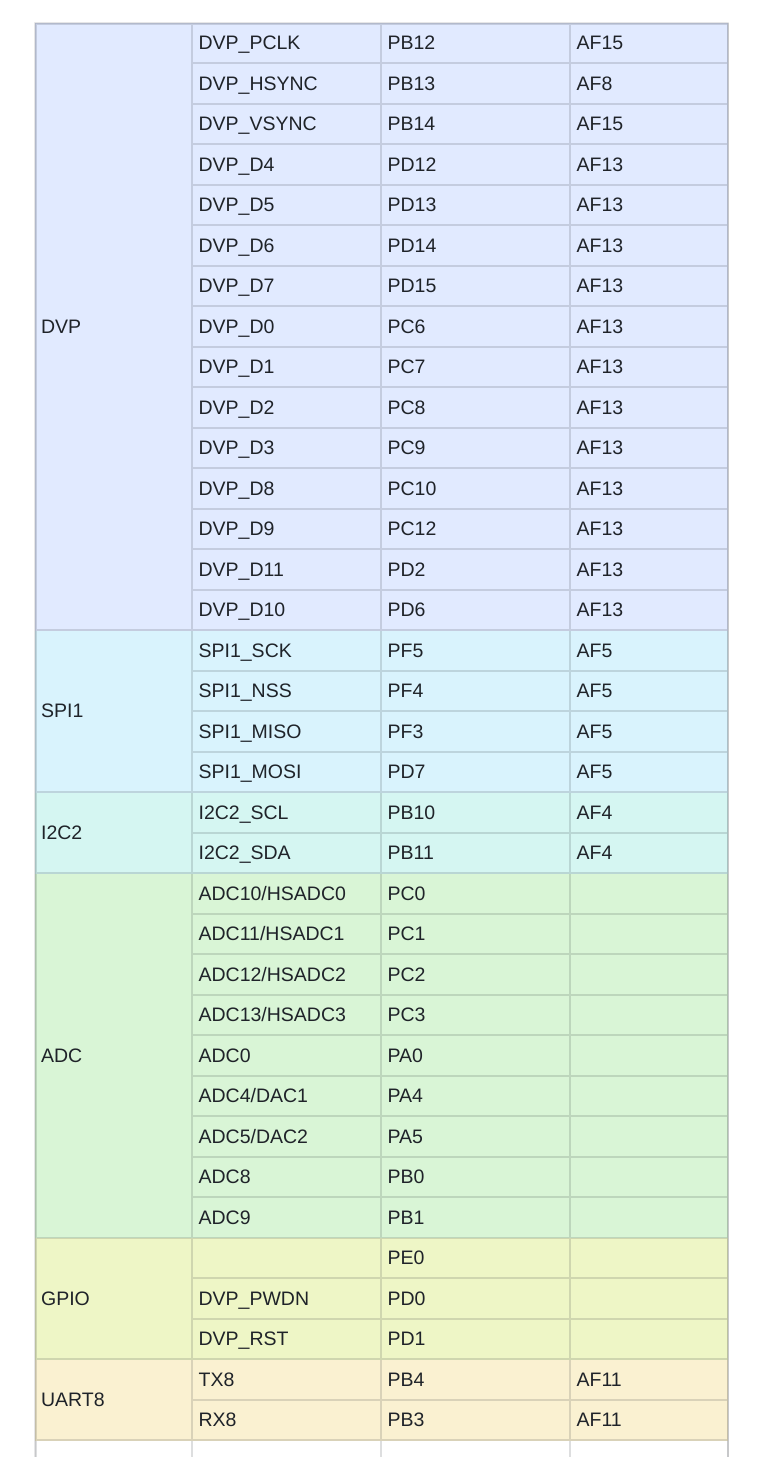
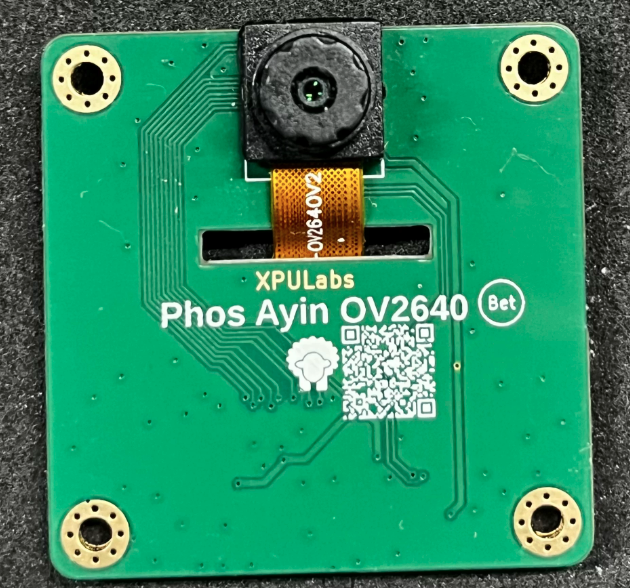
This interface currently supports connection with the Phos Ayin OV2640 module.
-
Phos Ayin OV2640 Module
5. Software
CH32H417M uses MounRiver II IDE for development development. It supports Windows & Linux.
The debugger is WCH Link-E 1V3, XPU Labs also developed a debugger for this board. It uses the 1.27mm spacing of the CH32H417M board-to-board headers
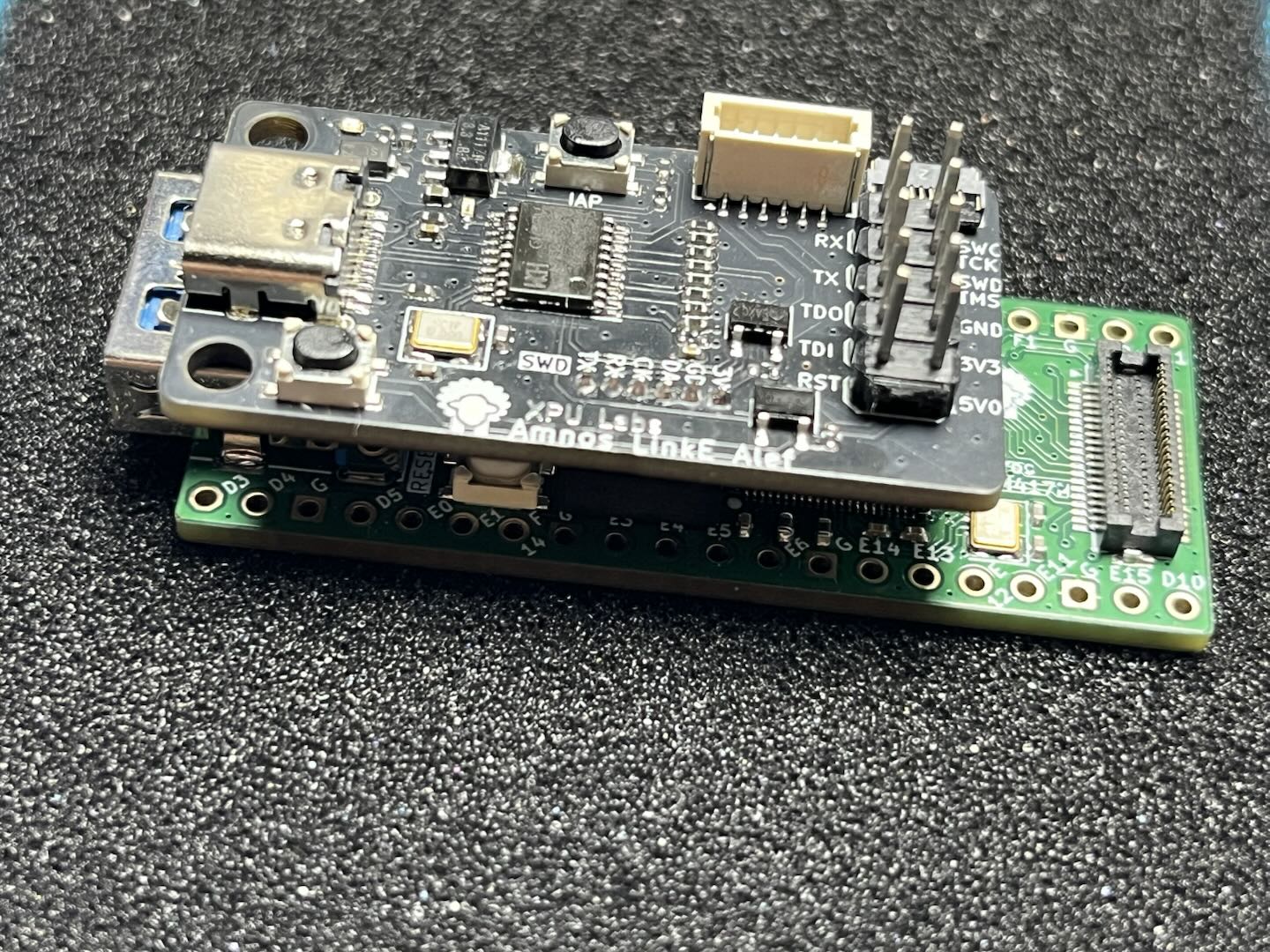
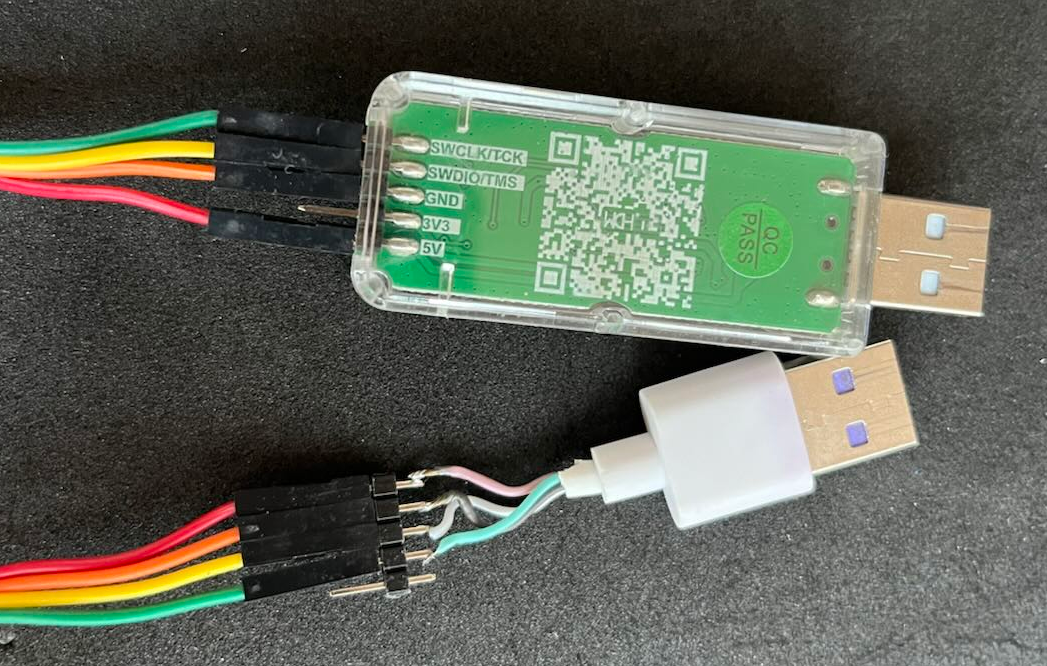
Another approach is to use a standard USB2.0 Type‑A port with externally connected pin headers to interface with Link‑E. Simply plug the USB2.0 Type‑A connector into the board’s USB3.0 Type‑A port.
6. Tutorials
TBD
7. Resources
-
原理图
-
例程
8. Exapmles
TBD
9. FAQ
TBD